In case you missed it, Netflix is increasing its prices starting May 6th, 2026. Depending on your account, prices increased by 8% to 12.52%. Those with extra members outside the household took a much higher hit, with increases of 14.31% to 25.03%.
Subscribers are quite familiar with Netflix’s annual price increases, which typically come as regularly as clockwork.
-
- Standard plan (no ads/two devices): $19.99, up $2 from $17.99
- Ad-supported plan: $8.99, up $1 from $7.99
- Premier plan (no ads/four devices): $26.99, up $2 from $24.99
- Extra member fee (outside the household, w/o ads): $9.99, up from $7.99
- Extra member fee (outside the household, with ads): $7.99, up from $6.99
When asked about the reasoning behind its monthly price hike, the company responded with the same boilerplate hype we’ve heard in previous years.
“We’re updating our prices to keep improving what you already love. Expect fresh, can’t-miss shows and movies every week (including 87 new releases next month).”
As we know, hype and information are two entirely different things. In this case, it is obvious that Netflix’s increases are higher in its ad-supported tier, which has grown sufficiently over the last year and shows no signs of dropping. Netflix generates revenue from advertisers based on the number of subscribers in a given tier, but taxing subscribers for an increase makes no sense. But let’s go a bit deeper into the web of deceit.
Netflix appears to be using a virtuous cycle as a self-reinforcing chain of positive events, where one beneficial outcome causes the next, resulting in continuous improvement and sustainable growth. It is the opposite of a vicious cycle, creating momentum that often leads to exponential success rather than decline.
Netflix adds content to its large and growing library, attracts new subscribers, and uses the proceeds from its monthly fees to add more content, which attracts more subscribers. This flywheel has been employed successfully by Netflix since the beginning, so there’s no reason for the company to change gears now. Or is there?
The company sees value as the addition of new movies for the subscribers or the way in which they claim;
“Our approach remains the same: We continue offering a range of prices and plans to meet a variety of needs, and as we deliver more value to our members we are updating our prices to enable us to reinvest in quality entertainment and improve their experience by updating our prices.”
Think about this for a moment. Who would pay more based on the total number of items available in a store, when all that is needed is a light bulb? If this were true, then a restaurant menu would run to 10 pages or more if they wanted to increase the price of Enchiladas de Mole.
The subscriber only wants to watch a movie and be entertained. Obviously, there is a market value on how much an individual is willing to pay to watch that movie. If they have a Netflix Standard Plan and watch a movie every week for the 4.3 weeks in a month. Then dividing the plan price of $19.99 by 4.3 results in a cost of $4.64 per movie.
An adult ticket at Cineplex in Cuernavaca is $3.09 and only $1.41 on Wednesday. Some individuals will likely cancel their Netflix subscription rather than pay the higher charge. Netflix does not mind this churn for now, but the current plan is not sustainable, and at some point, their yearly increases will turn their profits around as they exceed market value and the number of new subscribers dwindles.
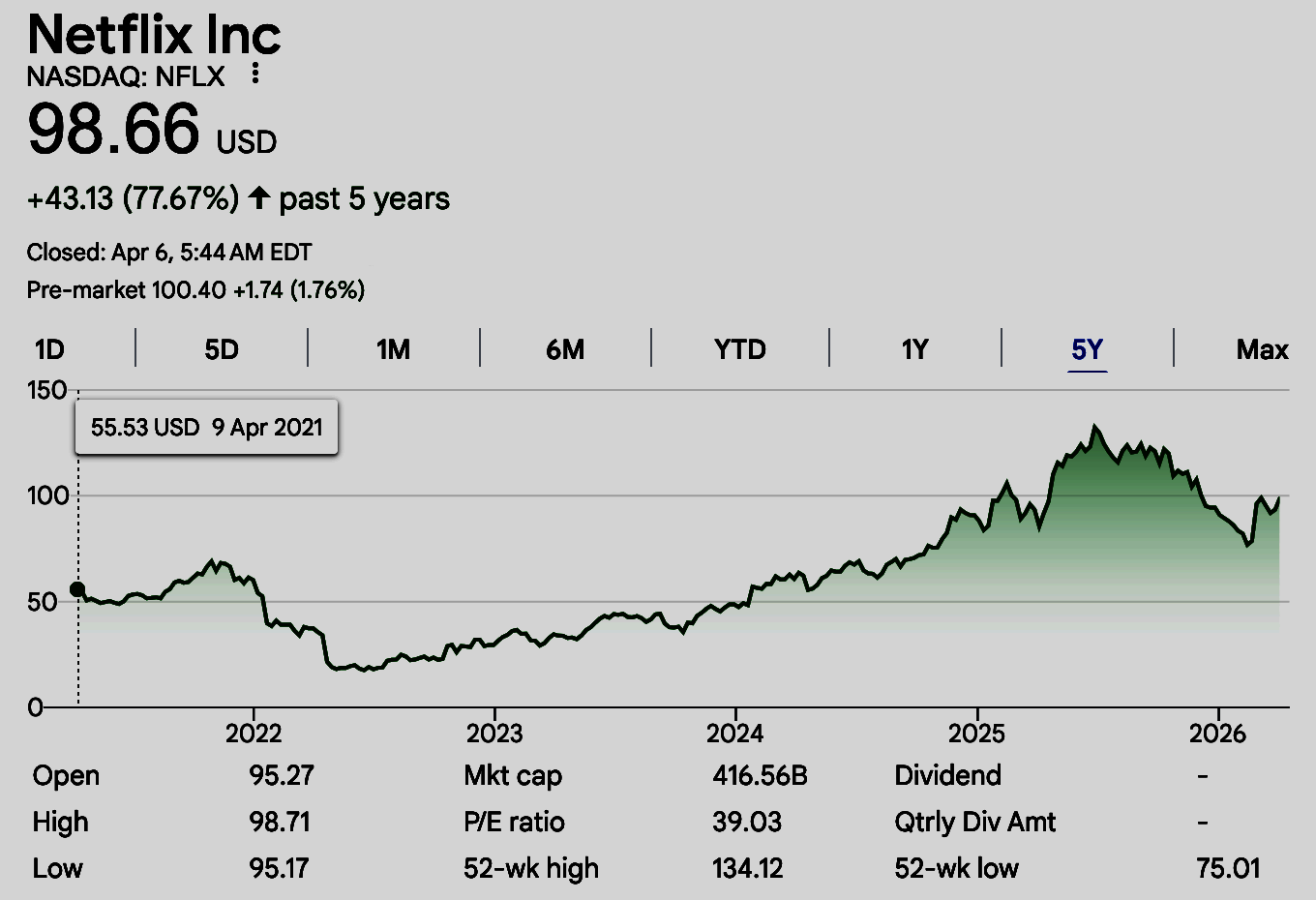
Indeed, Netflix shares are doing well for now, which is good for investors, but not so much for the subscribers.