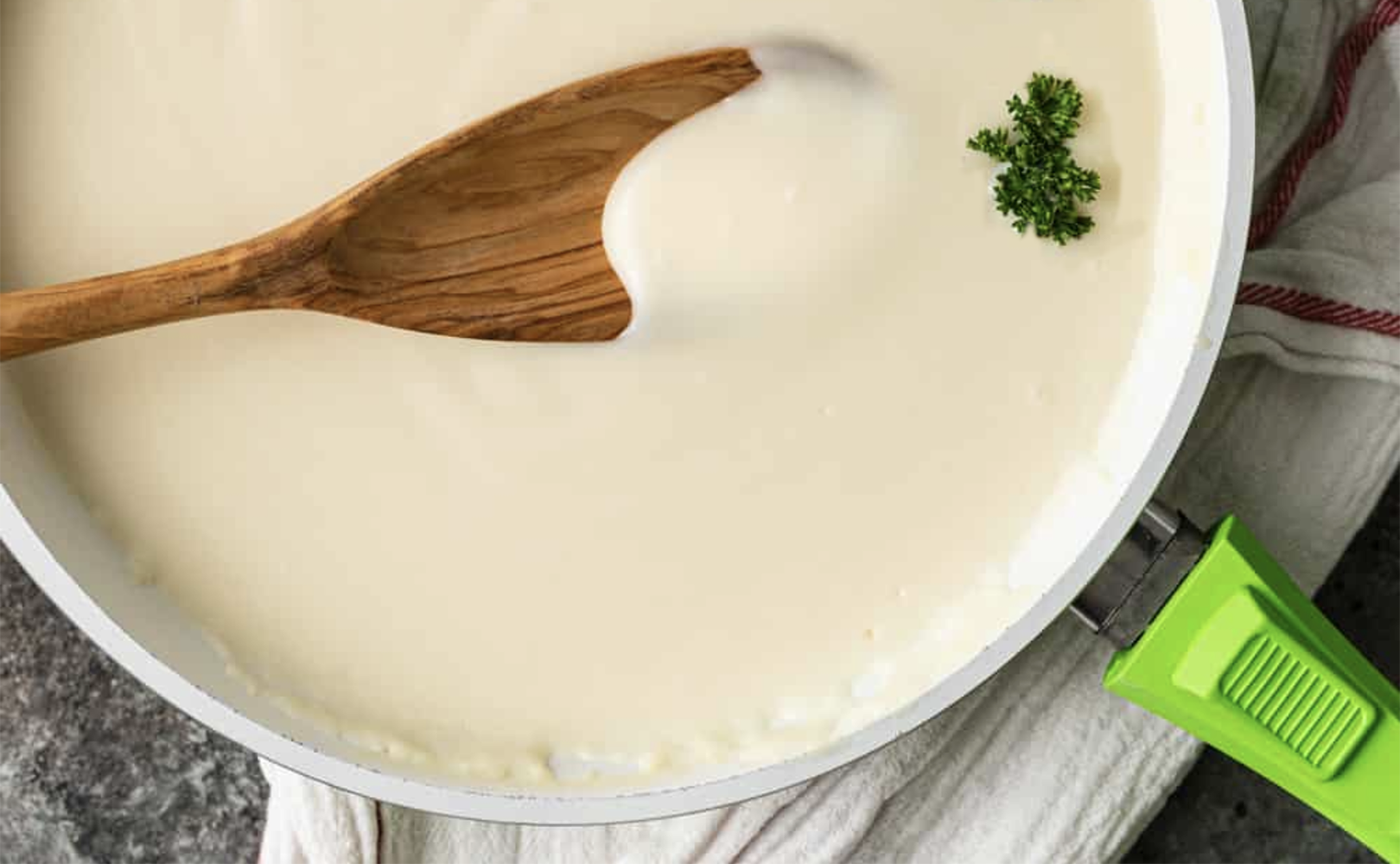
Bechamel, also known as white sauce, is one of the five “mother sauces” that are a staple in classic French cuisine. This just means it’s a basic sauce, used to create other sauces, which are known as secondary sauces. Bechamel is one of the most commonly used by home cooks. It can also be used as a sauce by itself, especially when adding extra seasonings.
Béchamel sauce is incredibly versatile, perfect for layering in lasagna, topping baked potatoes or vegetables (like cauliflower cheese), forming the base for rich mac and cheese, enriching chicken pot pies, making creamy soups and chowders, and even as a base for gravy (like sausage gravy for biscuits) or cheesy dips, essentially enriching almost any dish needing a creamy, savory binder or topping.
You can make your own béchamel sauce for a fraction of the cost of buying it in a store. To make a classic béchamel sauce, you’ll need three main ingredients: butter, all-purpose flour, and milk, plus seasonings. The process involves making a roux (a cooked mixture of butter and flour) and then gradually whisking in the milk until the sauce thickens and is smooth.
Note: Recipe ingredients, time, and temperature will vary with altitude differences in the north and south of Cuernavaca. Please see the article on Temperature Formula and Cooking Implications to achieve success at your unique altitude.
Ingredients
- 5 tablespoons (approx. 70g) unsalted butter
- ¼ cup (approx. 30g) all-purpose flour (for a thin sauce; use more for a thicker consistency)
- 4 cups (1 quart / 1 liter) whole milk (whole milk provides the creamiest result)
- 1 teaspoon salt, or to taste
- ¼ teaspoon freshly grated nutmeg, or a pinch, to taste (optional but traditional)
- Pinch of white or black pepper (optional)
Instructions
Prepare the milk (optional but recommended): In a small saucepan, gently warm the milk over low heat until it is steamy but not boiling. This helps the milk incorporate into the roux more smoothly and quickly.
Make the roux: In a separate medium to large saucepan, melt the butter over medium heat. Once the butter is melted and foamy, sprinkle in the flour.
Cook the roux: Whisk the butter and flour constantly to create a smooth paste. Continue cooking for about 1 to 2 minutes. The goal is to cook out the raw flour taste without browning the mixture (it should remain a pale, sandy color for a white sauce).
Add the milk: Remove the pan from the heat. Pour in about one-third of the warm milk and whisk vigorously until it is fully incorporated and the mixture is smooth. This vigorous whisking helps prevent lumps from forming.
Thicken the sauce: Slowly add the remaining milk in stages, whisking continuously after each addition until the milk is completely absorbed.
Simmer and season: Return the pan to medium-low heat. Bring the mixture to a gentle simmer, continuing to whisk frequently. Cook until the sauce has thickened enough to coat the back of a spoon, which typically takes 10 to 20 minutes.
Finish the sauce: Remove the saucepan from the heat. Stir in the salt, nutmeg, and pepper to taste.
Serve or store: The sauce is ready to use immediately. If storing, place plastic wrap directly on the surface of the sauce to prevent a skin from forming as it cools.
Variations
Béchamel is a “mother sauce” and serves as a base for many other sauces.
Mornay Sauce (Cheese Sauce): Stir in about 1/2 cup of grated cheese (such as cheddar, Gruyère, or Parmesan) during the final step until melted.
Infused Milk: For deeper flavor, traditional recipes suggest infusing the milk with a slice of onion, a bay leaf, and a few whole peppercorns, then straining the milk before adding it to the roux.
Thinner/Thicker Sauce: The ratio of roux to milk determines the thickness. For a thicker sauce (like for croquettes), increase the flour and butter amount; for a thinner sauce, add more milk.
Enjoy!
Note: As Cuernavaca sits on a mountainside and the elevation changes from north to south, the cooking times will vary. Please see the article: Temperature Formula and Cooking Implications for more information.


Author: G. William Hood
Author, Columnist, Educator, Epistemologist, and Publisher