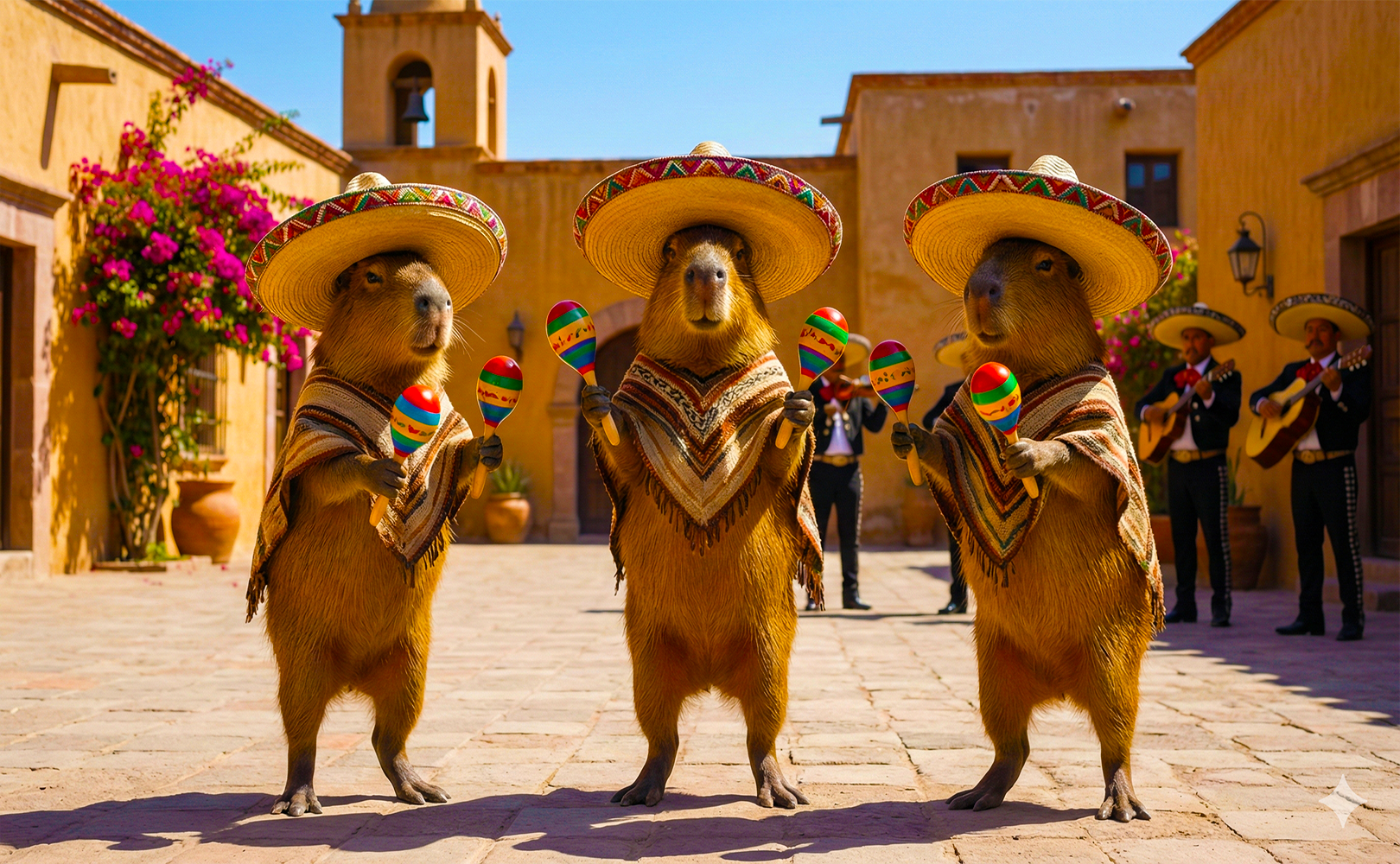
A recent cultural phenomenon is spreading rapidly throughout México, driven in part by musicians Chuy Lizárraga and José Angel Ledezma Quintero, who collectively attract 10 million monthly listeners on Spotify. Since launching their Capibaras Tour—named after the world’s largest rodent—these musicians have contributed to the animal’s growing popularity.
Capybaras (Capibaras in Spanish and Capivara in Portuguese) are South American rodents native to tropical rain forests and wetlands from Colombia to Argentina. In recent years, their popularity has increased significantly due to internet memes, resulting in a greater presence in captivity and popular culture.
Capybaras are sometimes sold as pets. However, many are abandoned after owners notice their distinctive scent. The strong, musky odor comes from the capybara’s anal glands, which are used for marking territory. This scent is persistent and pronounced. It is important to note that owning capybaras as pets in México is subject to legal restrictions and often requires special permits. Animal welfare experts generally advise against keeping capybaras as domestic pets due to their complex social and environmental needs, which are difficult to meet in home settings. As a result, their ownership can raise both ethical and practical concerns.
Responding to capybaras’ increasing prevalence, capybara protection organizations have been established nationwide to promote the proper care and protection of capybaras in México. These organizations engage in a variety of activities, including educating the public about responsible capybara ownership, advocating for animal welfare regulations, and partnering with wildlife authorities to rescue and rehabilitate abandoned or mistreated capybaras. Additionally, some groups organize community workshops and awareness campaigns to inform people about capybaras’ specific needs and the importance of preserving their natural habitats.
Capybaras, the world’s largest rodents, known for their relaxed appearance and calm demeanor, have recently become social media sensations, gathering millions of views on platforms such as TikTok and Instagram, and their popularity continues to surprise both tourists and locals as the capybaras continue to gain prominence across México.
Capybara events are continually popping up, such as the “Capibaras 5K” races in México City in November 2025, over 3,000 participants attended the “Capibaras 5K” race in the vcity’s expansive Chapultepec Park. Attendees wore capybara-themed shirts, hats, clips, and socks. Winners received capybara plush toys and capybara-themed trophies.
Also, there has been a rise of themed cafes like Café Capibara in Guadalajara and Capylandia Café in Monterrey, where patrons can enjoy capybara-inspired drinks and pastries. Additionally, capybaras have appeared in Mexican television sketches, online animations, and even feature in the hit animated series “Animalitos Urbanos.” Social media influencers regularly post viral content featuring capybara costumes and plush toys at festivals, and capybara-themed merchandise has been spotted at music events like El Festival Animal.
In August 2025, the Pai Pai Ecotourism Park near Ensenada, Baja California, is scheduled to inaugurate a “Capybara Village” where visitors can interact with capybaras.
Captivity: Capybaras are housed in specialized zoos and aquariums, including the Chapultepec Zoo in México City and Acuario Michin.
Confusion with Local Species: In regions such as Cancun and the Riviera Maya, visitors frequently mistake the native agouti (Dasyprocta) for a capybara. Locally referred to as the Sereque, this smaller, faster, and more agile relative of the capybara is commonly observed near hotels and in the jungles of southern states, including Veracruz, Oaxaca, Tabasco, and Chiapas.
The primary driver appears to be viral social media videos, which have attracted the attention of Chinese exporters. These exporters are producing inexpensive capybara-themed products that command higher prices due to their popularity. At the same time, the capybara craze has also begun to benefit local Mexican businesses and artisans. In cities such as México City, Guadalajara, and Monterrey, small businesses and craftspeople are now creating handmade capybara hats, mugs, plush toys, and artwork and have become prevalent in both urban centers and rural communities. This growth in local capybara merchandise not only supports entrepreneurs but also helps to keep some of the economic benefits within Mexican communities.

Author: G. William Hood
Author, Columnist, Educator, Epistemologist, and Publisher