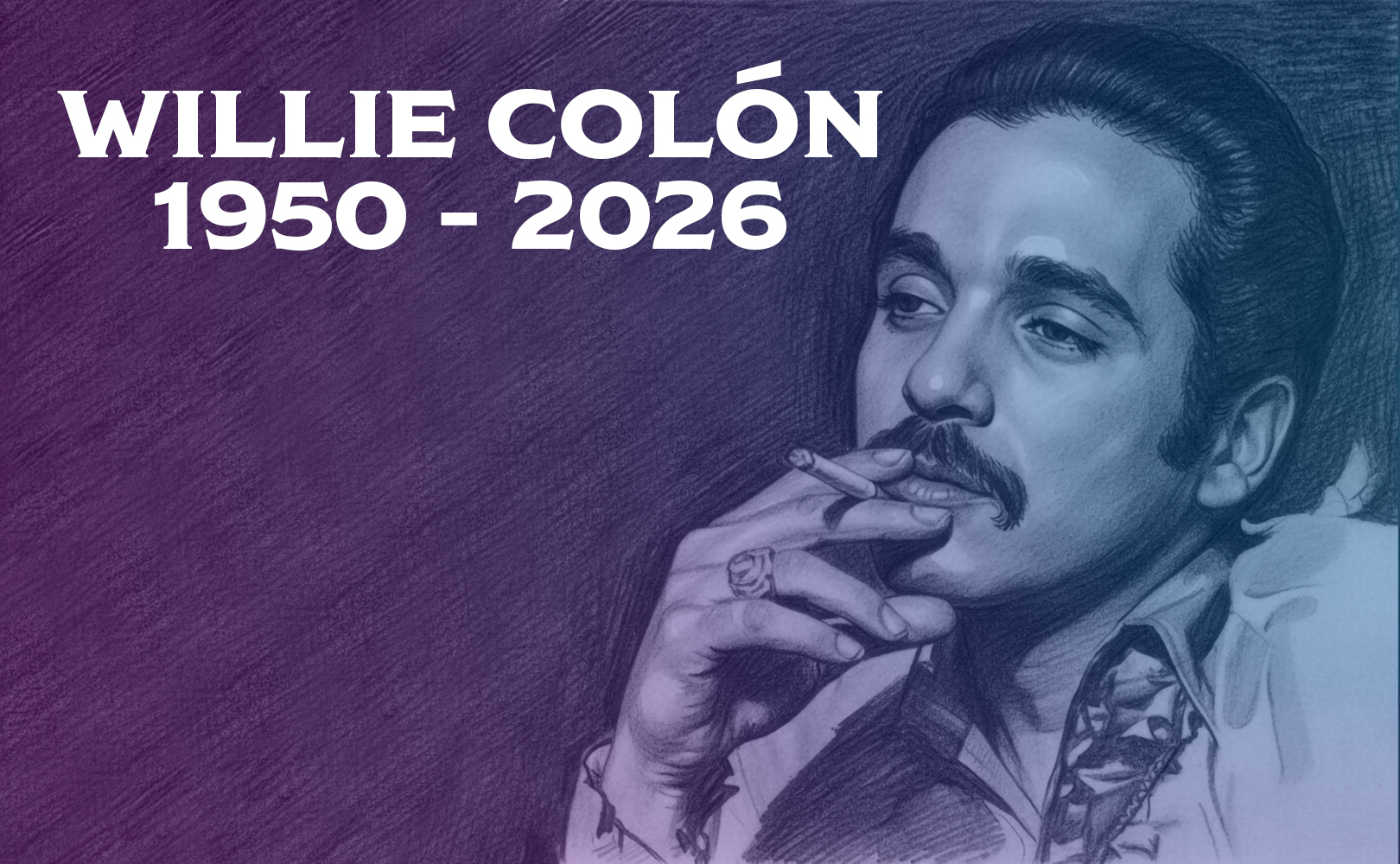
William Anthony Colón Román (April 28, 1950 – February 21, 2026), was a salsa legend who entertained the public for over 60 years, and recording more than two dozen albums for Fania Records.
Willie Colón, the salsa legend who helped take the genre to new heights and recorded over two dozen albums for Fania Records, died on Saturday at the age of 75. Over a career that spanned more than five decades, Colón was not only a prolific trombonist and bandleader but also a composer, producer, and activist. His innovative sound fused traditional salsa with jazz, rock, and other genres, making him one of the most influential figures in Latin music history.
Colón’s family announced his passing. They have requested privacy during this difficult time. Fans, fellow musicians, and public figures from around the world have already begun sharing tributes, highlighting not just his musical achievements but also his generosity and commitment to social causes.
“While we grieve his absence, we also rejoice in the timeless gift of his music and the cherished memories he created that will live on forever,” the statement said.
As a trombonist and bandleader from New York City, Colón played a major role in the evolution of Latin music during the 1970s. Born in the South Bronx in 1950 to Puerto Rican parents, Gladys Colón and William Colón Sr., he was raised in a family that prioritized cultural heritage and musical expression. His mother, originally from Puerto Rico, moved to New York City as a child and fostered Willie’s early love of music, while his father also maintained strong ties to the island. He grew up in a vibrant, multicultural neighborhood that was a melting pot of musical influences. His grandparents, who remained in Puerto Rico, kept him closely connected to the island’s traditions. As a teenager, Colón was inspired by the sounds he heard both at home and on the streets—R&B, rock, jazz, and Puerto Rican folk music he encountered during summer visits. These diverse influences helped shape his groundbreaking approach to salsa.
It is important to note that Puerto Rico has been a part of the United States since December 10, 1898, and is a Commonwealth of the U.S. All Puerto Ricans are U.S. citizens.
He began playing trumpet at age 12, then switched to trombone, quickly mastering the instrument. By 15, he was recording with a new independent label called Fania Records, which would later become synonymous with the salsa movement. At 17, Colón released his first album, “El Malo.” Although critics and older musicians initially dismissed his music as too raw and unorthodox, it resonated deeply with young Nuyoricans seeking music that reflected their identity and experience in New York City. His early success marked the beginning of a new era in Latin music.
The album featured Puerto Rican vocalist Hector Lavoe, who would later become one of salsa’s first major solo stars. Colón and Lavoe formed one of the most iconic partnerships in salsa history, recording several popular albums together between 1967 and 1975. Key albums from this era include “El Malo,” known for its raw sound and streetwise lyrics; “La Gran Fuga”; and “Cosa Nuestra,” which featured the hit song “Che Che Colé.” Their collaborations also produced timeless tracks such as “La Murga” and “Calle Luna, Calle Sol,” blending Afro-Caribbean rhythms with urban themes and helping to define the sound of salsa. The chemistry between Colón’s bold arrangements and Lavoe’s charismatic vocals made their records groundbreaking and influential, leaving a lasting impact on Latin music worldwide.
Two years later, Colón brought Panamanian vocalist and songwriter Rubén Blades into his band. Their collaboration marked a turning point in salsa, as their music began to address social and political issues affecting the Latino community, including immigration, inequality, and identity. This partnership led to their landmark 1978 album “Siembra,” which is still seen as one of salsa’s greatest achievements. “Siembra” became one of the best-selling salsa albums of all time and featured anthems like “Pedro Navaja” and “Plástico,” praised for their storytelling and social commentary.
Colón’s band stood out because of its powerful trombone-based brass section, a sound that became his signature and influenced countless other salsa bands. Beyond performing, he was a sought-after producer and arranger, shaping the sound of many Fania Records releases. His collaborations included working with legendary artists like Cuban vocalist Celia Cruz on the album “Only They Could Have Made This Album,” as well as producing and arranging for other salsa greats such as Ismael Miranda and Mon Rivera.
In his later years, Willie Colón balanced music and politics. Known for his activism and outspoken nature, he frequently advocated for Latino rights and social justice issues. In 1994, he ran as a Democrat in the primary for New York’s 17th congressional district and later for New York City Advocate. He also spent over a decade as an advisor to former New York mayor Michael Bloomberg, lending his voice to community initiatives and supporting various charitable organizations.
In the 2010s, Colón took a surprising detour from music by enrolling in the Westchester County Police Academy. He was sworn in as a police officer in 2014 at age 64, serving with the department part time for eight years while still performing concerts worldwide. Colón eventually resigned in 2022 as a deputy lieutenant, earning respect for his dedication to public service and his ability to bridge communities through both music and civic engagement.
In the end, Colón will be remembered most for his music and for the powerful legacy he leaves behind. His sound helped the Puerto Rican community in New York find its voice and inspired generations of musicians and fans. For many young Nuyoricans growing up in the city, his songs became anthems of resilience and belonging at a time when their culture was often overlooked or marginalized. At block parties and community gatherings, Colón’s tracks like “El Malo” and “Che Che Colé” brought people together, giving them a sense of pride in their roots and a way to celebrate their identity. His influence endures in every corner of Latin music, and his story serves as a testament to the enduring power of culture, creativity, and community.

Author: G. William Hood
Author, Columnist, Educator, Epistemologist, and Publisher