Any archaeological or cultural artifact found within Mexico is the property of the state.
It is important to understand that any archaeological or cultural artifact found within Mexico is the property of the state. Mexico passed laws in the late 19th century establishing state authority over archaeological finds, and the Federal Law on Archaeological, Artistic, and Historical Monuments and Sites continues to protect this heritage. Thus, artifacts found in Mexico belong to the Mexican state and are considered part of its national cultural heritage, protected under the Federal Law on Archaeological, Artistic, and Historical Monuments and Sites. The government actively works to prevent looting, combat illicit trafficking, and recover artifacts that have been illegally taken or sold abroad through diplomatic and legal efforts with other countries and organizations. These recovered artifacts are then sent to the National Institute of Anthropology and History (INAH) for study, preservation, and public display.
The issue of counterfeit Mesoamerican artifacts is longstanding and complex. Since the late 1800s, anthropologists have sounded alarms about the prevalence of counterfeit antiquities being sold to unsuspecting collectors in Europe and the United States, including tourists. Many of the forgeries produced in Mexico are so expertly crafted that they can easily elude detection, making the challenge of discerning genuine historical artifacts from modern fakes a persistent problem for scholars and collectors alike.
In Cuernavaca, there are many stores selling what they claim are antiques, or valuable collector items. However, it important to be aware. A recent outing in Cuernavaca’s Col. Jacarandas led to the discovery of a shop selling proclaimed originals of pastel works on paper by the renowned artists David Alfaro Siqueiros (1896-1974) and Rufino del Carmen Arellanes Tamayo (1899-1991). The paintings measured 55.8 x 76.2 cms (22×30 inches) and were stacked on a table. The price for each was MXN $4,000. The clue that these might not be originals by the artists was the low asking price. A signed and numbered mere print by Tamayo, usually be sold for MXN $103,062 with originals being sold for millions. The second clue was that the shop was not able to offer any documents of provenance on these works.
An Auction Example
In 2021, Christie’s auction house hosted a highly anticipated auction in Paris, titled ‘Quetzalcoatl: Serpent á Plumes,’ which included an impressive collection of approximately 33 pre-Hispanic artifacts originating from Mexico.
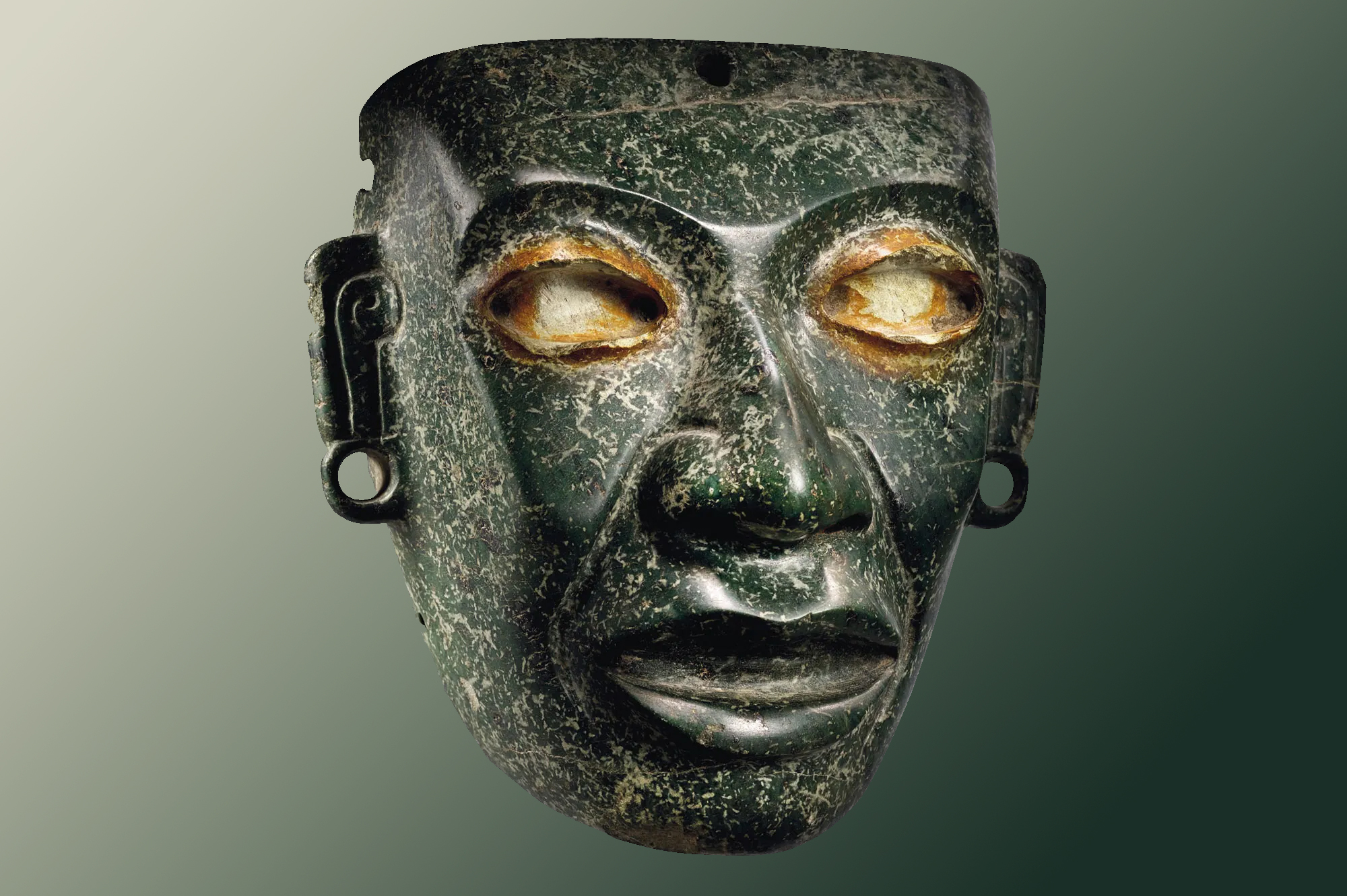
One of the standout items that garnered a significant amount of attention was a striking mask (shown above) from Teotihuacán, a site renowned for its monumental architecture and rich cultural history. This exquisite piece sold for an astonishing price of €437,500 (equivalent to US$509,772), reflecting the high demand for rare and historic Mesoamerican items among collectors and investors. The success of this auction was underscored by total sales reaching €2,559,125 (approximately US$2,983,289).
However, the event unfolded amidst a serious formal protest from Mexico’s National Institute of Anthropology and History (INAH), which claimed that many of the artifacts in question were patrimonial objects belonging to the nation.
INAH argued that these items had been smuggled out of Mexico after being looted from various unknown archaeological sites. Additionally, they raised concerns about the authenticity of some pieces, suggesting that certain artifacts could potentially be forgeries.
This protest reflects the broader and ongoing efforts by the Mexican government to reassert its control over the circulation and ownership of Mesoamerican artifacts, a struggle deeply rooted in the country’s colonial history and contemporary matters of national identity.
For instance, in September 2019, Mexico successfully opposed another auction in Paris that featured 120 artifacts, also asserting their argument for national ownership of cultural objects looted or illegally exported from their territory. The imperative for postcolonial nations like Mexico to reclaim their archaeological treasures is thus marked by a struggle against historical European dominance and a crucial aspect of constructing their national identity in the postcolonial era.
Historically, archaeological artifacts have been perceived in various ways. Initially, these items sparked the curiosity of antiquarians and collectors, intrigued by their age and mystery. However, as archaeology became a more formalized academic discipline, artifacts shifted from purely collectible items to subjects of rigorous scientific study. Their significance further evolved with the rise of the nation-state, as these artifacts transformed into potent symbols of nationalism.
In Mexico, during the late 19th century, artifacts such as the iconic Aztec sun stone—currently displayed prominently at the Museo Nacional de Antropología in Mexico City—and archaeological sites like Teotihuacán became fundamental to the nation’s identity, reinforcing governmental authority through historical legacy. For nations rich in archaeological heritage, such as Egypt and Mexico, protecting their cultural heritage remains a top priority. Mexico was among the pioneers in establishing national control over archaeological discoveries, instituting legislation in the 1880s aimed at curtailing the rampant looting of sites and the illegal trade of artifacts.
In 1897, laws were enacted that declared any artifacts discovered within Mexico’s borders belonged to the state and national museum, making their export without official government permits unlawful. Although these laws have endured and evolved, they were further solidified by a UNESCO mandate in 1970, which prohibits the trafficking of cultural artifacts.
In reaction to INAH’s urgent request to prevent the sale of the contested artifacts, Christie’s maintained confidence in the legitimacy of the provenance of the items sold during the auction.
However, Mexican historian and archaeologist Daniel Salinas Córdova expressed skepticism, noting that even though there might exist a documented history of previous ownership and collections, the specific circumstances surrounding how the artifacts left Mexico remain vague and often undocumented.
Following the auction, Christie’s reiterated its ethical stance, asserting that it would never knowingly offer an artwork that raised valid concerns around its authenticity or that had the potential to be looted or acquired through illegal means.
In this context, Diego Prieto, the head of INAH, strongly asserted that it constitutes a criminal act for these artifacts to be auctioned in Paris, as Mexican legislation classifies them as assets that legally belong to the nation. He emphasized that these objects are, by law, the inalienable and imperceptible property of Mexico. The sale of such patrimonial items in Mexico would not only be illegal but also morally questionable.
Salinas Córdova further highlighted the detrimental impact of auctions on cultural heritage, arguing that they foster the commercialization and privatization of national treasures while obstructing scholarly research and the dissemination of knowledge regarding the artifacts, perpetuating and encouraging archaeological looting.
Prieto has raised serious concerns regarding the authenticity of several items sold at the auction, suggesting that at least one artefact, the greenstone mask above was attributed to the Teotihuacán civilization and estimated to be around 1,400 years old, could actually date back to the 20th century.
Christie’s provenance records indicate that the greenstone mask had been sold by William Spratling, an American silversmith and art dealer, to French art dealer Pierre Matisse—son of the well-known artist Henri Matisse—in 1938. Under Mexican law, if Spratling intended to sell this item as an antiquity, he would have been required to obtain an unlikely permit from the Mexican government; and lacking such documentation renders the object the property of the Mexican state.
The uncovering of artifacts is a big business, especially because the owner or buyer is unable to recover the cost paid for the artefact.


Author: G. William Hood
Author, Columnist, Educator, Epistemologist, and Publisher