The woman historically blamed for her involvement in the dramatic downfall of the Mexica Empire in 1521 is now undergoing a modern and nuanced reinterpretation. Known to the Spanish conquistadors as Marina, she was called Malintzin by the indigenous peoples of pre-Hispanic Mexico, a name that resonates deeply with their cultural heritage. As time progressed, she became widely known as Malinche, a figure whose story is both complex and contentious.
Malinche’s pivotal role as a translator and interpreter for the ambitious Spanish conquistador Hernán Cortés positioned her at the heart of a violent and transformative era in colonial history. Her exceptional linguistic skills allowed her to facilitate communication between the Spaniards and various indigenous tribes, often placing her in critical situations that ultimately influenced the course of events during the Conquest. Her contributions gave her a degree of power and visibility, but they also subjected her to scrutiny and blame, as her actions impacted countless lives in devastating ways.
The narrative surrounding Malinche has primarily been shaped by the voices of others—historians, writers, and cultural commentators—leading to a wealth of myths and legends surrounding her character. This has fueled ongoing debates about her motivations and true nature. Was she a traitor to her own people, engaging in a dangerous alliance with the Spanish invaders and thus betraying her heritage? Did she occupy the role of lover to Cortés, symbolizing the intimate entanglements of colonization? Alternatively, was she simply a pawn in a much larger game, utilizing her remarkable language abilities as a means to navigate a perilous existence? Or can she be viewed as a woman with agency, influencing Cortés’s decisions and helping to shape pivotal historical moments?
These profound discussions continue to resonate even five centuries later, capturing the attention of modern leaders, including Mexico’s first female president, Claudia Sheinbaum. Recognizing the significance of revisiting and reclaiming Malinche’s narrative, she advocates for a fresh perspective that honors the complexity of this historical figure.
In a significant cultural initiative set to commence this Sunday, Mexico will embark on a series of lively events dedicated to celebrating the legacy of Malinche, invoking her original pre-Hispanic name, Malintzin. These celebratory activities will coincide with the anniversary of Christopher Columbus’s arrival in the Americas, a deliberate choice that highlights the intricate interplay of history, culture, and identity. Through these events, Mexico aims to foster a deeper understanding of Malinche’s life, not just as a figure of controversy, but as a symbol of resilience and nuance in a colonial narrative that remains vital today. By reclaiming Malinche’s story, the country seeks to recognize and honor the multi-dimensional realities of historical figures and to reflect on the broader implications of colonial encounters on contemporary society.
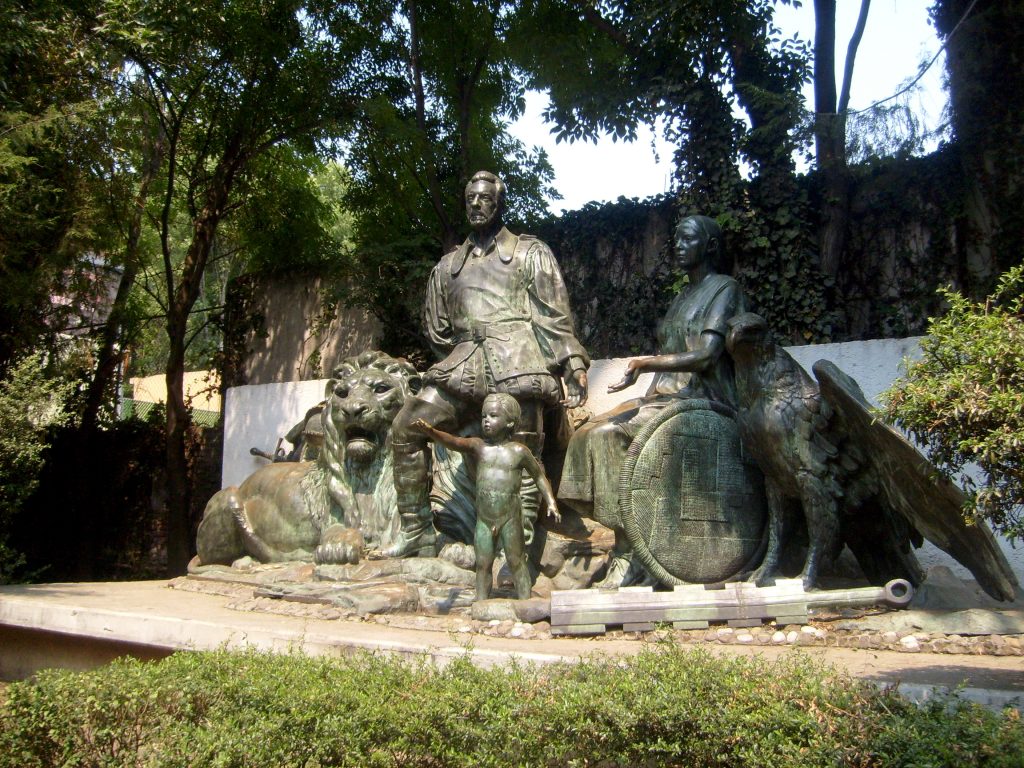
“Monumento al Mestizaje” by Julián Martínez y M. Maldonado (1982). Represents Hernan Cortes, Marina and their son, Martín Cortes, commisioned by the then Mexican President Lopez Portillo. The Mexican actor of Spanish origin Germán Robles posed as Hernán Cortés. Originally it was put in the Center of Coyoacan, near the place where Cortes country house existed, but was moved from a prominent place of display to Jardín Xicoténcatl, Barrio de San Diego Churubusco, due to protests. Currently the figure of the child has disappeared, possibly due to vandalism. Photo by Javier Delgado Rosa


Author: G. William Hood
Author, Columnist, Educator, Epistemologist, and Publisher