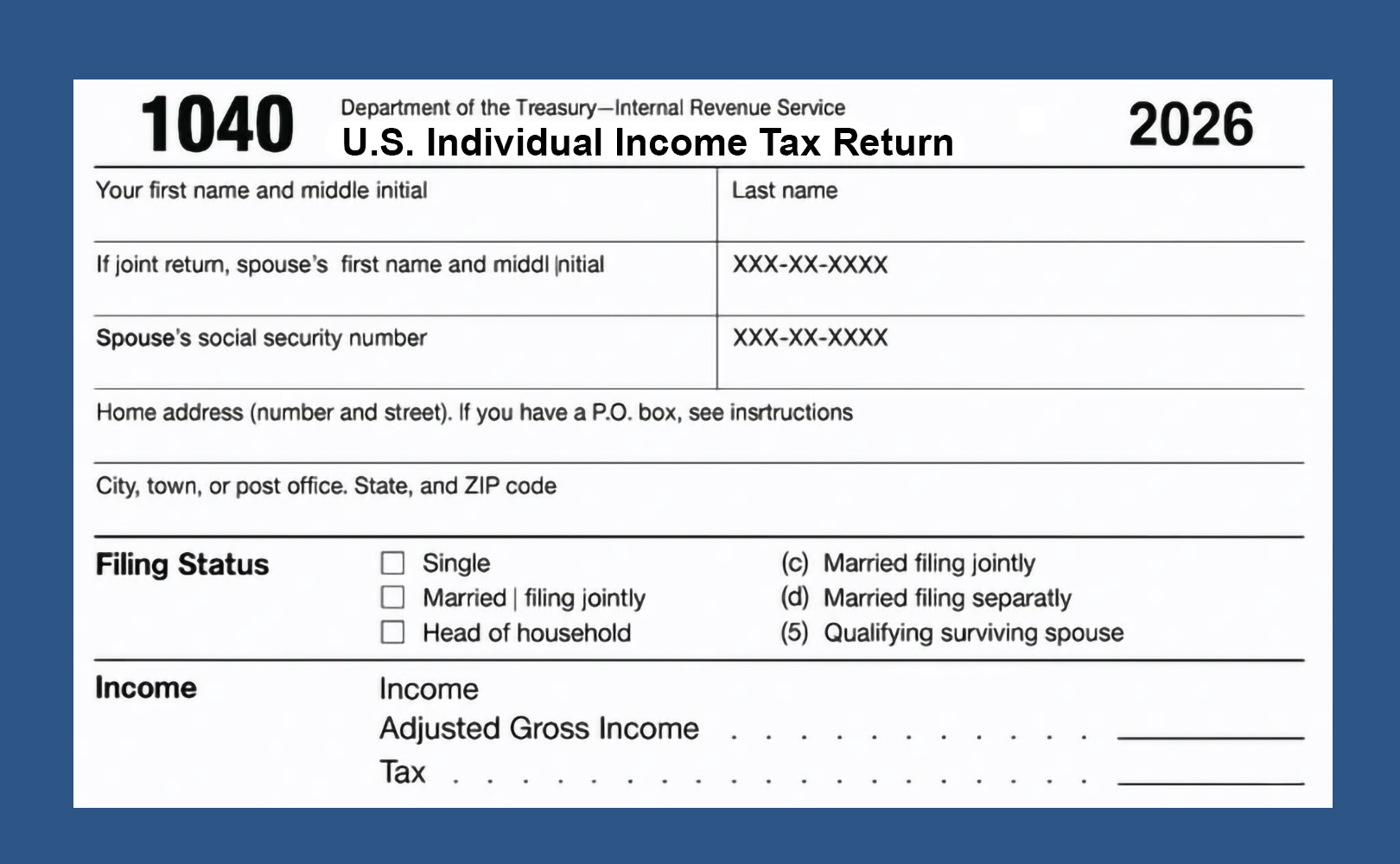
Has anyone wondered why attorneys do not seem to have a grasp on the English language and seemingly cannot write to be understood? The tax laws and instructions to tax papers should be written on no more than an 8th grade level to ensure that most can understand them. Here, we attempt to explain the new U.S. Tax Deductions. Please note that we are not giving legal advice and if you do not understand the tax documents, you should contact the tax office for clarification.
Among the criteria for deducting some tip income is that the tips must be voluntary, meaning the customer always decides when and how much to give. In addition, the taxpayer must maintain detailed records of all tip income, including the date, amount received, and source of each tip, to substantiate the deduction in the event of an IRS audit. An easy way to meet this requirement is to keep a small notebook or ledger to record each tip as it is received, or to use a smartphone app designed for tip tracking. Regularly updating these records ensures that information remains accurate and makes it easier to provide documentation if requested.
Key 2026 Tax Deduction & Limit Changes in Bullet Points
For the 2026 tax year (returns filed in 2027), several new and enhanced deductions have been enacted under the One, Big, Beautiful Bill Act (OBBBA). These include brand-new breaks for workers, seniors, and car owners, as well as significant adjustments to existing standard and itemized deductions.
New Targeted Deductions (Claimable by Everyone)
These four new deductions can be claimed whether you take the standard deduction or itemize, using the new IRS Schedule 1-A.
- Qualified Tips Deduction: Workers in designated “tipped” occupations can deduct up to $25,000 of cash tips from their taxable income.
– Phases out for single filers with MAGI over $150,000 and joint filers over $300,000.
- Qualified Overtime Deduction: Eligible workers can deduct up to $12,500 ($25,000 for joint filers) in overtime pay.
– Phases out starting at $150,000 (single) or $300,000 (joint) MAGI.
- Enhanced Senior Deduction: Individuals age 65+ can claim an additional $6,000 deduction ($12,000 if both spouses qualify).
– This is separate from the existing “additional standard deduction” for seniors.
– Phases out for single filers with MAGI over $75,000 and joint filers over $150,000.
- Car Loan Interest Deduction: You can deduct up to $10,000 in interest paid on a loan for a new, U.S.-assembled personal vehicle.
– Phases out for single filers with MAGI over $100,000 and joint filers over $200,000.
Standard & Itemized Deduction Changes
- Standard Deduction (2026): Amounts have increased for inflation:
– Single / Married Filing Separately: $16,100
– Married Filing Jointly: $32,200
– Head of Household: $24,150
- New Charitable Deduction (Non-Itemizers): If you take the standard deduction, you can now deduct cash donations up to $1,000 ($2,000 for joint filers).
- Higher SALT Cap: For those who itemize, the State and Local Tax (SALT) deduction cap is now $40,400 (up from $10,000 in previous years).
– This cap begins to phase out for those with MAGI exceeding $505,000.
- Private Mortgage Insurance (PMI): PMI premiums are once again tax-deductible for the 2026 tax year.
Business & Investment Deductions
- 100% Bonus Depreciation: Restored for 2026; businesses can immediately deduct the full cost of qualifying equipment placed in service.
- Qualified Business Income (QBI): The 20% deduction for pass-through entities has been made permanent.
- Gambling Loss Cap: Taxpayers can now only deduct 90% of gambling losses against winnings, even if losses exceed winnings.
More Detail
The recently introduced tax deductions for tips, overtime, seniors, and car loan interest have led many taxpayers to anticipate significant increases in refunds or substantial reductions in their tax liability. These deductions were enacted as part of a legislative effort to provide financial relief to workers in industries with variable income, retirees on a fixed income, and individuals incurring substantial vehicle-related expenses.
While some individuals may experience these benefits, others may find that the new deductions provide a smaller reduction than anticipated or no reduction at all. Eligibility for these deductions depends on meeting strict income thresholds, the nature of income received, and compliance with specific documentation requirements as outlined by the IRS.
This difference in expected relief is due to the complex eligibility requirements and detailed rules that can limit actual benefits, especially when these deductions are promoted using phrases like “no tax on …” This phrase also appears on Schedule 1-A, the form used to claim these deductions.
Taxpayers should adjust expectations, as none of these deductions result in a complete tax exemption.
These breaks are deductions, which reduce your tax liability by a percentage of the deductible amount. That percentage matches your tax bracket (for example, 12% or 22%). This means a $100 deduction reduces your tax owed by $12 if you are in the 12% bracket, or by $22 if in the 22% bracket. The deduction does not directly reduce your taxes by the full amount claimed.
To calculate your tax savings from a deduction, follow these steps:
1. Subtract all applicable deductions, including any new deductions you qualify for, to find your taxable income.
2. Find your tax bracket based on the taxable income.
3. Multiply your deduction amount by your tax bracket rate (e.g., $100 x 12% = $12) to estimate your tax savings.
4. Use current IRS tax tables or tax preparation software to confirm your final tax liability or refund amount.
By following these steps, you’ll know exactly how a deduction translates to tax savings based on your bracket and deductible amount. This helps you estimate your actual tax reduction or refund increase.
Additionally, income thresholds determine eligibility for these deductions, and there are specific definitions for what constitutes “qualified” tips, overtime, and car loan interest, as well as caps on deductible amounts. The IRS publishes annually updated guidelines and worksheets to help filers determine eligibility and the exact amounts they may claim for each deduction.
The following sections outline the primary limitations, documentation standards, and potential audit risks associated with each of the four deductions. Common audit triggers include missing or incomplete documentation, discrepancies between reported income and deduction claims, math errors, and failing to follow eligibility requirements. Filers should take extra care to keep thorough records, check calculations, and make sure only eligible expenses and amounts are claimed to avoid these triggers and file more confidently.
Tips deduction
How much may filers deduct? Up to $25,000 of “qualified” tips per return – even if both spouses earn tips. “It’s not a per-spouse limit,” the IRS notes in its 1040 instructions. The deduction is claimed on Schedule 1-A and must be supported by contemporaneous records such as tip logs, pay stubs, and employer-provided statements.
What are “qualified” tips, exactly? Per the IRS, these are tips received from customers or, for employees, through a tip-sharing arrangement in an occupation that customarily and regularly received tips on or before December 31, 2024. This includes, but is not limited to, occupations such as servers, bartenders, and hotel staff. The IRS may require documentation such as employer statements or payroll records to verify eligibility.
Additionally, only “voluntary” tips qualify, meaning the customer determines whether and how much to tip. For example, automatic gratuities, such as an 18% charge for large parties, are not deductible.
Self-employed individuals may deduct qualified tips only up to the amount of gross business income minus all other business deductions, excluding the tip deduction itself. These deductions include “the deductible part of self-employment tax; the deduction for contributions to self-employed SEP, SIMPLE, and qualified plans; and the self-employed health insurance deduction.” It is essential for self-employed taxpayers to maintain thorough records of all business income, expenses, and tips received, as these may be subject to IRS review.
The modified adjusted gross income (MAGI) was $150,000 or less in 2025 ($300,000 if married). A partial deduction is available if MAGI was above those thresholds, but the deduction is disallowed if MAGI was $400,000 or more ($550,000 or more if married). Taxpayers must use the worksheet provided in the IRS instructions to calculate the reduction in the deduction when MAGI exceeds the lower limit but is below the disallowance threshold. The worksheet can usually be found in the instructions for Schedule 1-A, either in the IRS forms booklet or on the IRS website. To use the worksheet, fill in your MAGI, deduction amount, and follow the step-by-step lines provided, which help you determine how much of the deduction you are eligible to claim based on your specific income. This process ensures that your deduction amount is correctly adjusted and reported.
You earned your tips in one of these industries.
A valid Social Security number is required.
A joint return must be filed if married. The IRS allows a deduction of up to $12,500 ($25,000 if married filing jointly) for qualified overtime compensation. “Qualified” overtime refers to the portion of pay exceeding the standard wage. For example, if an employee is paid time-and-a-half, only the additional “half” portion is deductible. Documentation such as pay stubs, employer-provided wage statements, or payroll logs must be retained to substantiate overtime claims.
Eligibility requirements for the overtime deduction include the following criteria, each of which must be meticulously documented and retained for potential IRS review:
The MAGI was $150,000 or less in 2025 ($300,000 if married). A partial deduction is available if MAGI was above those thresholds, but the deduction is disallowed if MAGI was $275,000 or more ($550,000 or more if married). The amount of the deduction available phases out as MAGI increases, and the IRS provides a worksheet to help calculate the allowable deduction.
A valid Social Security number is required.
A joint return must be filed if married.
Deduction for seniors
Although sometimes described as “no tax on Social Security,” this provision is actually an enhanced general deduction for senior citizens and does not alter the taxation of Social Security benefits. Social Security benefits continue to be taxed according to standard IRS rules, meaning a portion may be taxable depending on the filer’s other income. The new deduction may help reduce your overall taxable income, but it does not directly exempt Social Security benefits from taxation or change how they are calculated for tax purposes. Seniors should review IRS guidance to determine exactly how their benefits and this deduction interact.
How much may filers deduct? Up to $6,000 (or $12,000 if married filing jointly). This deduction is in addition to the standard deduction or itemized deductions, and is intended to reduce taxable income for eligible seniors. The deduction is claimed on Schedule 1-A and may require supporting documentation such as proof of age and Social Security number.
Eligibility requirements for the senior deduction include the following, all of which must be documented and retained for IRS verification if requested:
The filer and/or spouse must have been born before January 2, 1961. To deduct up to $12,000 as a married couple, both spouses must be at least 65 years old at the end of the tax year.
Appropriate documentation, such as government-issued identification or birth certificates, may be required to verify age.
A valid Social Security number is required for the filer and/or spouse.
MAGI in the previous year must have been $75,000 or less ($150,000 if married). The value of the deduction is reduced above those thresholds but is disallowed if MAGI exceeded $175,000 ($250,000 if married). Taxpayers must calculate the allowable deduction using the worksheet in the IRS instructions.
Car loan interest deduction
How much may filers deduct? Up to $10,000 for qualified car loan interest. Only interest paid on loans for eligible vehicles is deductible, and the deduction must be claimed on Schedule 1-A with supporting documentation such as loan agreements, payment statements, and proof of vehicle purchase.
Eligibility requirements for the car loan interest deduction include all of the following, with each criterion requiring supporting documentation for IRS review if requested:
“Qualified passenger vehicle loan interest” must have been paid or accrued in 2025.
The loan must have originated in 2025 for the purchase of a new (not used) vehicle. The loan may not be from family or friends. Supporting documents, such as the loan origination agreement and bill of sale, are required to prove eligibility.
The vehicle (e.g., a car, motorcycle, van, SUV, or pickup truck) must be for personal use as defined by the IRS, meaning it is used for personal reasons more than 50% of the time. Taxpayers should maintain a log or other evidence of personal versus business use to support the deduction in the event of an audit.
Final assembly of the vehicle must have occurred in the US, as indicated by the Vehicle Identification Number (VIN). Documentation such as the manufacturer’s certificate of origin or the vehicle title may be required to verify assembly location.
MAGI in 2025 must have been no more than $100,000 ($200,000 if married filing jointly). The value of the deduction is reduced above those thresholds but is disallowed if MAGI exceeded $149,000 ($249,000 for joint filers). Taxpayers must use the phase-out worksheet in the IRS instructions to determine the allowable deduction if income exceeds the lower threshold.
The tips and overtime deductions are reduced by $100 for every $1,000 that MAGI exceeds $150,000 ($300,000 if married), according to Tom O’Saben, director of tax content for the National Association of Tax Professionals. For example, single filers with a MAGI of $175,000 would see the deductible reduced by $2,500 [$100 x ($175,000 – $150,000/1,000)].
This reduction is calculated using the worksheet in the IRS instructions, and taxpayers should retain all supporting documents to substantiate both income and deduction calculations.
To help you apply this reduction, here is a step-by-step example for a single filer:
1. Find your MAGI (modified adjusted gross income). In this example, the MAGI is $175,000.
2. Determine the threshold amount for your filing status. For a single filer, the threshold is $150,000.
3. Subtract the threshold from your MAGI: $175,000 minus $150,000 equals $25,000.
4. Divide the excess amount by $1,000: $25,000 divided by $1,000 equals 25.
5. Multiply this number by $100: 25 times $100 equals $2,500. This is the amount by which your deduction will be reduced.
6. Subtract the reduction from your maximum available deduction. For example, if the original deduction is $25,000, your new deduction would be $22,500 after reduction ($25,000 minus $2,500).
Following these steps ensures you can confidently calculate your allowable deduction based on your own MAGI and see how the reduction applies to your situation.
The senior deduction is reduced by 6% of the amount that MAGI exceeds $75,000 ($150,000 if married), according to CPA Miklos Ringbauer. For example, single filers with a MAGI of $130,000 would see the deduction cut by $3,300 [6% × ($130,000 − $75,000)]. In that case, only $2,700 could be deducted [$6,000-$3,300]. Taxpayers must use the IRS worksheet for precise calculation and keep records showing their MAGI and deduction computation.
The car loan interest deduction is reduced by $200 for every $1,000 that MAGI exceeds $100,000 ($200,000 if married), according to enrolled agent David Mellem. For example, single filers whose MAGI was $110,000 would see the deduction cut by $2,000 [$200 x ($10,000/1,000)]. If $9,000 was paid in qualified loan interest, only $7,000 could be deducted. The IRS worksheet must be used to determine the allowable deduction, and supporting documentation, such as payment records and income statements, should be maintained.

Author: G. William Hood
Author, Columnist, Educator, Epistemologist, and Publisher