In a groundbreaking archaeological discovery, scientists have unearthed the oldest and most complete skeleton of its kind, a stunning relic that dates back over 12,000 years, nestled in the lush and culturally rich Yucatán Peninsula, not far from the picturesque coastal town of Tulum, Mexico. This extraordinary finding is not merely a historical curiosity; it serves as a crucial key to unlocking the long-standing mystery surrounding the striking physical differences observed between the earliest humans who migrated into the Americas and the subsequent Native American populations that emerged. As researchers embark on a rigorous analysis of this ancient skeleton, new insights into the evolution of human morphology—a field that explores the physical variations across human populations—are coming to light.
For many decades, anthropologists have been captivated by a puzzling question: why do modern Native Americans not exhibit a closer resemblance to their ancient ancestors, the Paleoamericans, who first arrived on the continent during the Pleistocene epoch? This period was marked by dramatic climatic changes and significant glacial activities, culminating around 12,000 years ago, which shaped the environments that these early humans inhabited. In a pivotal study published in the renowned journal *Science* in 2014, a dedicated team of archaeologists heralded a remarkable announcement: they had discovered the most complete skeleton from this ancient period ever found in the Americas, setting the stage for a fresh exploration of human ancestry.
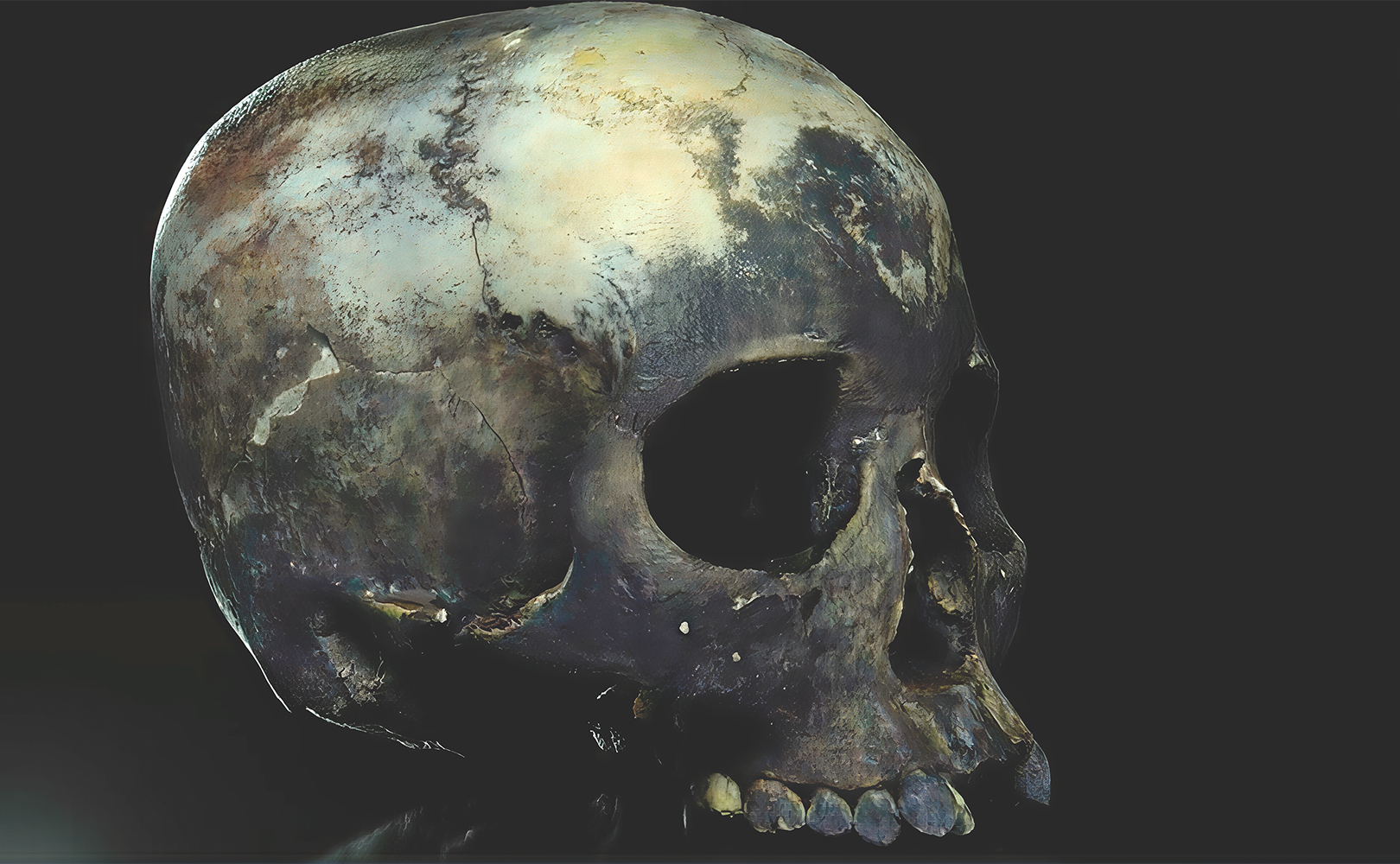
This exceptional skeleton, affectionately dubbed “Naia,” derives her name from the enchanting water nymphs of ancient Greek mythology, who were believed to inhabit lakes, rivers, and other bodies of water. Naia was a 16-year-old girl whose life came tragically to an end when she fell more than 100 feet into a complex network of karst caves. Despite her untimely demise, Naia offers a significant window into our past. The caves, which were largely dry at the end of the Pleistocene, eventually became her final resting place—now referred to as Hoyo Negro, or “Black Hole” in Spanish, a name that emphasizes the cave’s mysterious allure and depth.
The revelation of Naia’s skeleton presents a rich tapestry of physical features that intricately link her to both the ancient Paleoamericans and modern Native American populations. Detailed forensic analysis reveals that her skull showcases unique craniofacial characteristics typical of ancient populations. These include larger overall skull dimensions, a narrow facial structure accompanied by wide-set, deeply placed eyes, a gently sloping yet prominent forehead, and outward-projecting teeth. Such distinctive features stand in stark contrast to the physical traits commonly associated with contemporary Native Americans, hinting at a complex and nuanced evolutionary journey shaped by environmental adaptations and migrating waves of people.
This discovery raises crucial questions regarding the origins of these morphological differences: Are they the result of evolutionary adaptations within the original populations that settled in the Americas, or did the Paleoamericans, once the predominant inhabitants, gradually give way to subsequent waves of migration that introduced populations possessing features more aligned with those of modern Native Americans?
The DNA Trail
Naia’s narrative, while steeped in tragedy, embodies a profound importance in the ongoing study of human origins. Her skeletal remains offer a rare combination of distinctive physical traits and invaluable genetic information that can help illuminate the ancestral lineage of the early inhabitants of the Americas. The discovery of Naia, paired with genetic evidence extracted from other ancient remains, is reshaping our understanding of human ancestry, offering insights into how populations have evolved and diversified over millennia.
The archaeological team has revealed that Naia’s mitochondrial DNA establishes a genetic connection to contemporary Native Americans, positioning her as part of a shared ancestral heritage. This significant genetic component not only interlinks Naia with modern populations but also enriches our understanding of the continuity and transformation within human genetics across thousands of years.
The find at Hoyo Negro comes at a particularly exciting time in genetic research, especially in light of the recent genomic sequencing of remains from an infant discovered at the Anzick Clovis site in Montana. Estimated to be approximately 12,600 years old, this earlier specimen provided compelling evidence that supports a shared genetic lineage with present-day Native Americans, further anchoring our understanding of the ancient migration patterns across North America.
Current genetic analyses suggest that the ancestors of today’s Native Americans descended from an adventurous population originating in Asia. These early migrants likely found themselves isolated from other groups for extensive periods in a region known as Beringia, which stretched from Siberia across the Bering Strait into Alaska during the last glacial maximum. Within this isolated environment, they developed unique genetic markers that laid the groundwork for subsequent populations in the Americas. However, before the significant Anzick discovery, there had been a notable scarcity of genetic data from Paleoamerican skeletal specimens, making the connections between these ancient peoples and contemporary Native Americans a perplexing enigma.
While the genetic data derived from the Anzick find is more expansive—encompassing both mitochondrial and nuclear DNA—Naia’s skeleton retains the distinction of being the more complete specimen. Researchers emphasize that while the Anzick genome underscores a shared ancestry with Native peoples, it also reinforces the perspective that the cultural and physical disparities observed today are products of evolutionary changes over time rather than a straightforward replacement of one population by another. Nevertheless, identifying the specific factors responsible for these morphological shifts continues to be a profound and significant challenge within the field of anthropology and genetics, prompting ongoing exploration and inquiry.
From Hunters to Settlers: Unraveling the Transformation of Ancient Americans
The archaeological community is engrossed in a captivating journey, delving into the profound ways in which the physical characteristics of ancient Americans evolved over thousands of years. This transformation was intricately molded by the varying pressures of diverse environments and the substantial shifts in lifestyle experienced by early human groups. As these groups made a monumental transition from their nomadic lifestyles—characterized by constant movement and the foraging of wild resources—as hunter-gatherers to the establishment of stable settlements grounded in agriculture and domestic life, researchers suggest that this crucial lifestyle shift may have favored the emergence of specific physical traits more suitable for these new circumstances.
The transition toward a sedentary existence—illustrated vividly by the cultivation of crops and the crafting of permanent dwellings—most likely sparked significant reconfigurations of physiological traits over generations. From these newly settled communities, novel social dynamics may have arisen, potentially granting women increased influence and agency over food resources, fundamentally reshaping their roles in society. This newfound empowerment could have facilitated the inheritance of beneficial hereditary traits, thereby influencing the physical characteristics of subsequent generations. Such sociocultural evolution might shed light on the softer and more rounded facial features observed in contemporary Native Americans. These traits may not merely result from genetic drift; they may also reflect domesticated characteristics favored in groups undergoing a fascinating process called neotenization, whereby youthful traits are retained into adulthood.
While these theories spark intrigue and captivate researchers, there is a marked caution among the scientific team. They deliberately avoid probing into the specific biological mechanisms that may drive these evolutionary adaptations, emphasizing the crucial need to appreciate the vast diversity of physical forms present within human populations. They also acknowledge the significant challenges posed by the scarcity of cranial specimens from ancient times. Thus, the researchers advocate for a careful and nuanced interpretation of their findings, particularly those emerging from the extraordinary Hoyo Negro site, a location that has provided invaluable insights into the early chapters of human history.
One of the critical breakthroughs from this site is Naia—the ancient skeleton discovered within the submerged caverns of the Yucatán Peninsula. This remarkable find offers an essential, tangible connection to the physical and cultural evolution of early populations, enriching our understanding of genealogical lineages and the broader trajectory of human history across the Americas’ diverse and expansive landscapes. Naia’s discovery casts a warm glow on the complexities of our ancestral past, opening thrilling avenues for future research that promise to unravel further mysteries regarding humanity’s intricate journey through the ages.
The unique submersion of the cave, which occurred between approximately 10,000 and 4,000 years ago, played a pivotal role in the remarkable preservation of Naia’s skeleton. The underwater environment, marked by a striking absence of sediment buildup, permitted her bones to remain astonishingly exposed and accessible for eager divers seeking to study them. However, this extraordinary preservation carries its own set of challenges; the skeleton has become heavily mineralized over the millennia. While this mineralization grants the bones a robust and enduring quality, ideal for precise skeletal measurements, it also complicates efforts to establish accurate dating.
Due to the absence of bone collagen—an essential element for radiocarbon dating—the research team adopted an intricate triangulation technique to determine Naia’s age. This sophisticated approach involved analyzing the age of the calcite crystals, often referred to as “florets,” that had formed on the bones, carbon-dating bat guano found in the vicinity, and scrutinizing Naia’s teeth enamel for critical clues regarding her age. By synthesizing these findings with evidence derived from nearby Pleistocene-era animal remains and considering estimates related to the timeline of the cave’s flooding, the researchers confidently concluded that Naia’s skeleton dates back at least 12,000 years, with some estimates suggesting it could be as astonishing as 13,000 years old.
As excitement and interest surrounding Naia’s remains have surged, so too have concerns over their preservation. This rising anxiety has been magnified by incidents involving unauthorized divers who have breached the chamber, carelessly taking photographs and disturbing the delicate skeletal remains during their secretive explorations.
Mariá del Pilar Luna Erreguerena, the head of underwater archaeology for Mexico’s National Institute of Anthropology and History, voiced her frustration regarding these violations, stating, “We tried to keep everything in situ.” Her esteemed institution has been pivotal in coordinating the Hoyo Negro project, benefiting immensely from the partnership with the National Geographic Expeditions Council to safeguard and study this significant archaeological site.


Author: G. William Hood
Author, Columnist, Educator, Epistemologist, and Publisher