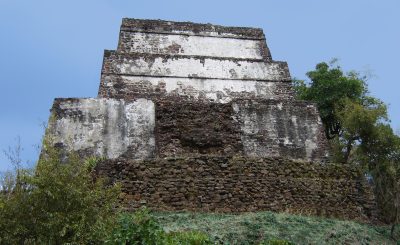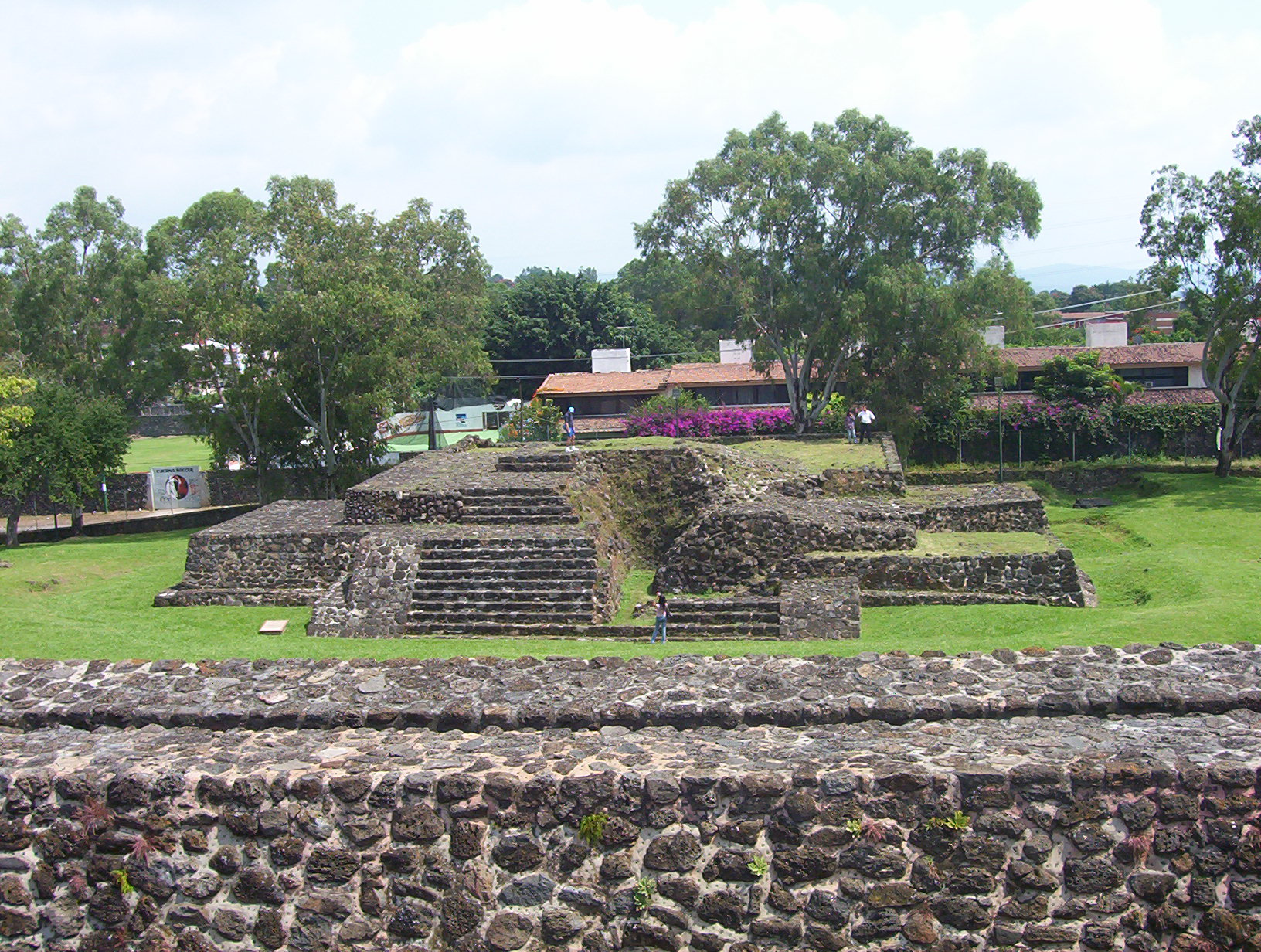
In the Vista Hermosa Colonia of Cuernavaca, Mexico, sits the archaeological site of Teopanzolco (from the Nahuatl language, meaning “the place of the old temple.” While the area was once sprawling countryside of coniferous woodland with rolling hills, it now lies within the confines of this modern city. Built on a hill formed by lava flowing from the active stratovolcano Popocatépetl (116.7 km from Cuernavaca), the remains date from 1150 to 1350.
Teopanzolco was built by the Tlahuicas and the Mexica or Culhua-Mexica. They were also known as the Tenochca, a name derived from the ancestor Tenoch. It is also the source of the name of the great capital city, Tenochtitlán, on the site of current-day Mexico City.
Aztecs
While many refer to the Aztecs the fact is that the word did not exist prior to 1810. The German explorer and scientist Alexander von Humboldt arrived in Mexico in 1803 after traveling throughout parts of Latin America. Impressed by what he experienced and saw in Mexico City, he became interested in the country’s indigenous past (the country was then still New Spain). He wrote about the Aztecs and created illustrations of their sculptures. In 1810, Humboldt used the name “Aztecs” to describe the powerful Mesoamerican people who had built a vast empire in Mexico and who encountered the Spaniards in 1519. He adapted the name Aztec from the Nahua word Aztlan, which referred to their mythical homeland. Several decades later, the historian William H. Prescott popularized the term, and it is still common today.
Architecture
The architecture is in a Mexican style since the distribution of the main buildings and characters is very similar to the sacred precinct of the Templo Mayor of Tenochtitlan. The two temples preserved in the upper part of the large base represent a unique Mexican architectural element that exists and is conserved throughout the territory of Morelos. Buildings for the worship of the gods are distributed around the large square.
Temples and other essential buildings rose on the bases and platforms. The gods worshiped included Huitzilopochtli, Tlaloc, Tezcatlipoca, and Ehecatl, among others. These are the same gods that the Mexica worshiped. Moreover, the inhabitants of this site performed sacrifices, and human remains, together with offerings, were placed in pits inside the lower platforms.
The settling of Morelos Valley occurred about 2000 BC, and there is evidence to believe that there was an earlier occupation in the great square of Teopanzolco. During the Classic Period, Teopanzolco came under the influence of the great metropolis of Teotihuacan in the Valley of Mexico. By the Postclassic Period, various Nahua groups had moved into the Altiplano; the Tlahuicas Indians founded the city of Cuauhnahuac (the pre-Spanish name for Cuernavaca) pronounced Kwaa-nah-wok sometime around 1200 AD when they first settled here. They built the Teopanzolco Pyramids before being conquered by the Mexica emperor Moctezuma Ilhuicamina in 1427 AD. The once-peaceful Tlahuicas were integrated into the Mexica Empire and forced to pay tribute in large amounts of cotton blankets and to participate in the Mexica military campaigns. The arrival of the Spaniards in 1521 brought a close to the prehispanic history of Teopanzolco.
Teopanzolco may have been the city’s original center of Cuauhnahuac during the Early Mexica period (AD 1150–1350). The ceremonial center was relocated to what is now the center of modern-day Cuernavaca; no new construction was undertaken at Teopanzolco. Eventually, Teopanzolco became covered in dust and dirt, and by 1910, it was completely covered over.
In 1910, during the Mexican Revolution, the revolutionary forces of Emiliano Zapata installed an artillery emplacement upon the hill covering the Great Platform to shell Federalist positions in the center of Cuernavaca. The resulting cannon fire shook loose the soil, revealing the stonework below.
The modern history of Teopanzolco begins with the first excavations at the site in 1921; no further investigations took place until it was excavated in 1956-7 by Mexican archaeologists Román Piña Chan and Eduardo Noguera, who investigated the temple of Ehecatl and established a ceramic sequence for the site.
Further archaeological investigations took place in 1968-9 by Angulo Villaseñor and in 1980 by Wanda Tomassi. The Instituto Nacional de Antropología e Historia (INAH), National Institute of Anthropology and History, has undertaken maintenance and minor excavations annually since 1985.
Archaeologists preserved the ceremonial center of Teopanzolco. The residential areas of the prehispanic city lie beneath the modern development of Vista Hermosa; for this reason, the city’s actual size is unknown. The surviving remains were built using local basalt. Although nothing survives the original finishing, the buildings may have had painted plaster, as at other archaeological sites. Although developed by both Tlahuicas and the Mexica, the dominant architectural style and the excavated ceramics are of Mexica origin.
- Great Platform, or Building 1, is the principal building within the archaeological zone. It consists of a westward-facing rectangular pyramidal base that once supported twin temples; the northernmost was dedicated to Tlaloc, the Mexica rain god, while the southern temple was dedicated to Huitzilopochtli, the god of war. Two parallel stairways give access to the temples. This style of double temple is of Mexica origin. Two phases of buildings are evident; the second is practically identical to the first and built on top of it. Only the Platform survives from the second phase, but sections of the walls of the twin temples survive from the earlier building phase. The later phase of construction was interrupted by the Spanish Conquest.
- The Temple of Tlaloc consisted of a small enclosure surrounded by four pillars that presumably supported a wide roof extending beyond the temple enclosure itself. It is situated upon the Great Platform.
- The Temple of Huitzilopochtli was larger than the Temple of Tlaloc and consisted of two rooms, one lying behind the other and accessed through it. The remains of an altar have been found in this inner sanctum, which is situated upon the Great Platform.
- Building 2 is a low, irregular platform with a wide north-facing stairway.
- Building 3 is a small rectangular platform with an east-facing stairway.
- Building 4 is a wide but shallow rectangular platform with a borderless east-facing stairway. The archaeologists found a pit in this structure, which contained many human bones together with two obsidian knives. The bones belonged to 35 individuals of both genders who had been sacrificed and dismembered.
- Building 5 is another small rectangular platform with an east-facing stairway.
- Building 6 is a small rectangular platform with an east-facing stairway.
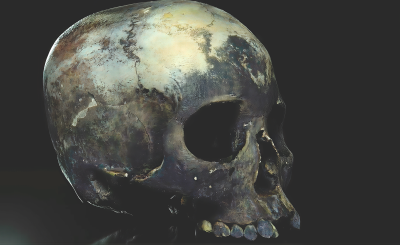
- Building 7 is a small, low, circular platform with an east-facing stairway. It was a shrine dedicated to Ehecatl, the Mexica god of wind, one of the manifestations of Quetzalcoatl. Inside this Platform, a sunken chamber was found, filled with offerings of ceramic vessels and human skulls, probably belonging to sacrificial victims.
- Building 8 is a small rectangular platform with an east-facing stairway.
- Building 9 is another low circular platform. It was another shrine to Ehecatl, slightly larger than the similar Building 7.
- Building 10 is a rectangular east-west platform located behind buildings 3 to 6. It has two stairways facing east and another facing to the west. It has been expanded several times during its history.
- Building 12 is a large platform aligned with the Great Platform, lying directly to the north. It has three west-facing stairways.
- Temple of Tezcatlipoca or Building 13 is directly behind (i.e., to the east of) the Great Platform. Its lower level had a double stairway facing towards the latter, and the upper level had a single, wide stairway. A cannonball strike during the Mexican Revolution and a large looters’ pit inflicted extensive damage upon the remains.
- Platform 15 is located at the southern edge of the archaeological site. It was excavated in 1997. It was a large platform in a poor state of preservation. Below the Platform, archaeologists found the remains of a residence whose inhabitants manufactured dyes, as evidenced by the discovery of hearths with tools and traces of iron oxide-based pigments. Archaeologists demolished the residence to build the overlying Platform, leaving only the foundations containing domestic human burials.
The site is in the care of the Instituto Nacional de Antropología e Historia (National Institute of Anthropology and History). It is normally open Monday through Sunday from 9 am to 6 pm.
Visitors can buy admission tickets to the archaeological zone daily from 9 am until 5:30 pm.
References
- García Moll, Roberto (1993) Teopanzolco, Morelos miniguide, Instituto Nacional de Antropología e Historia, Mexico. (Spanish)
- Kelly, Joyce (2001) An Archaeological Guide to Central and Southern Mexico, University of Oklahoma Press.